 English
 Español
  Português
  русский
  Français
  日本語
日本語  Deutsch
  tiếng Việt
  Italiano
  Nederlands
  ภาษาไทย
  Polski
  한국어
한국어  Svenska
  magyar
  Malay
Malay  বাংলা ভাষার
  Dansk
Dansk  Suomi
Suomi  हिन्दी

Home
>
Products > Hydraulic Block Forming Machine
>
Concrete Batching Machine for Brick Making Machinery
Products
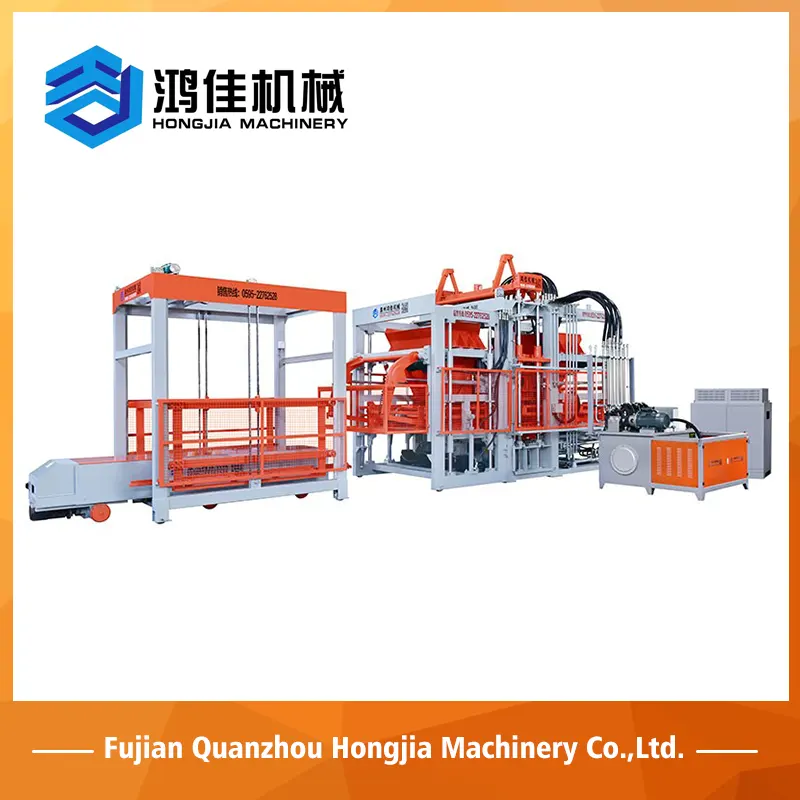
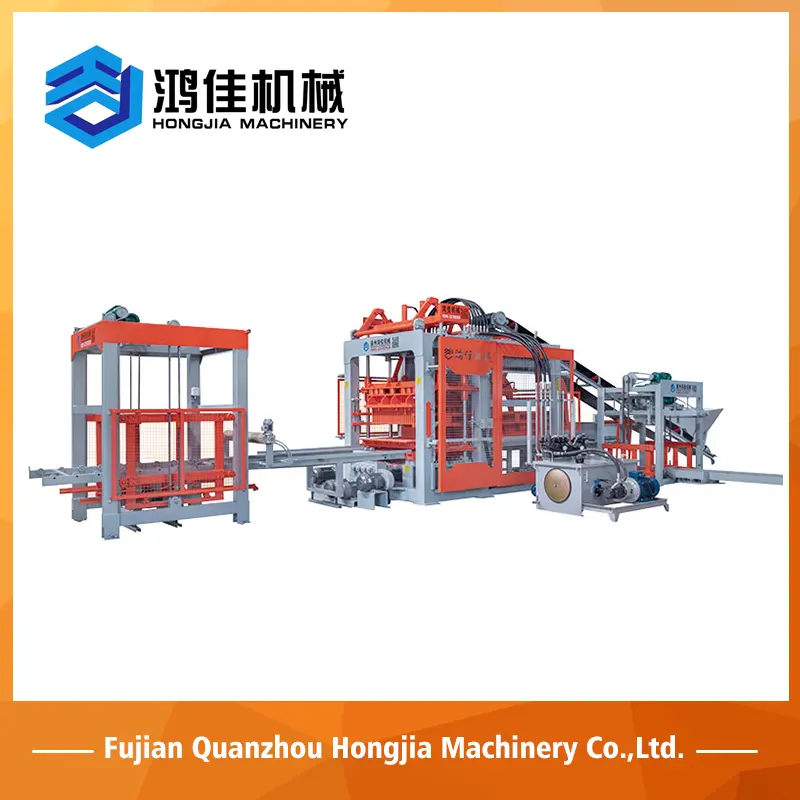
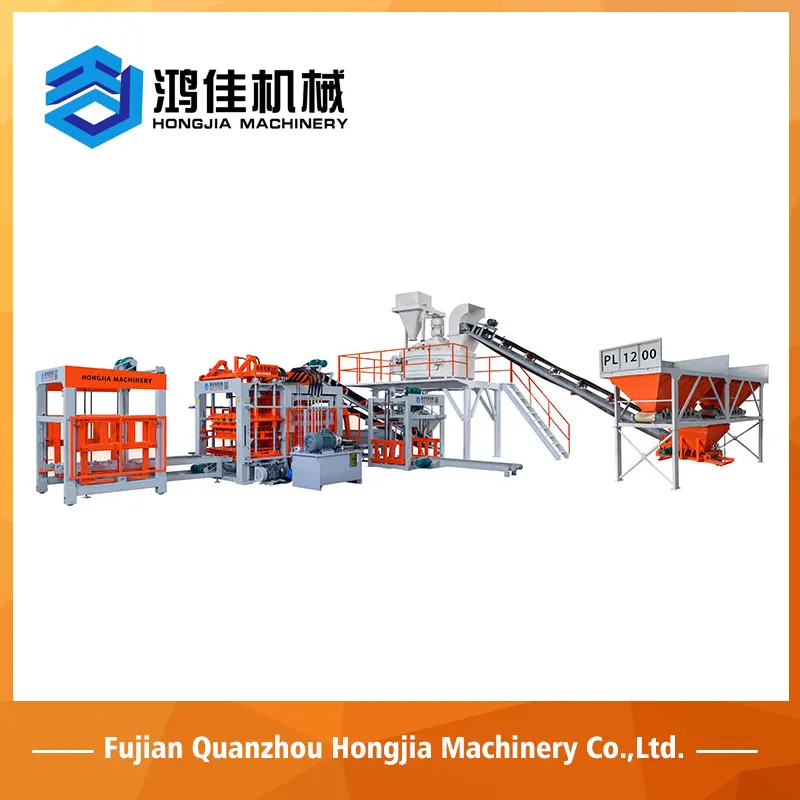
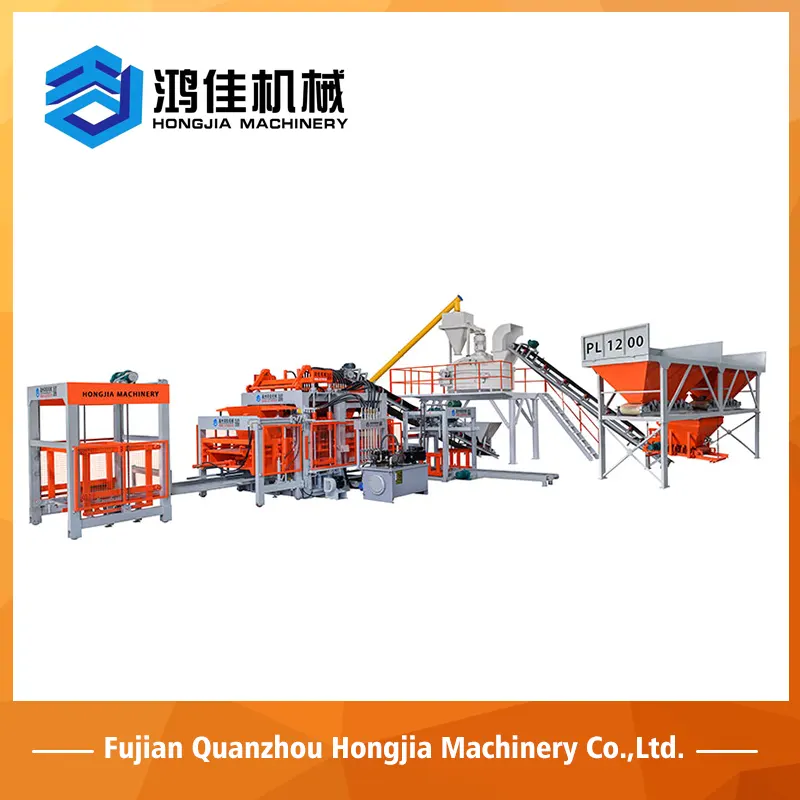
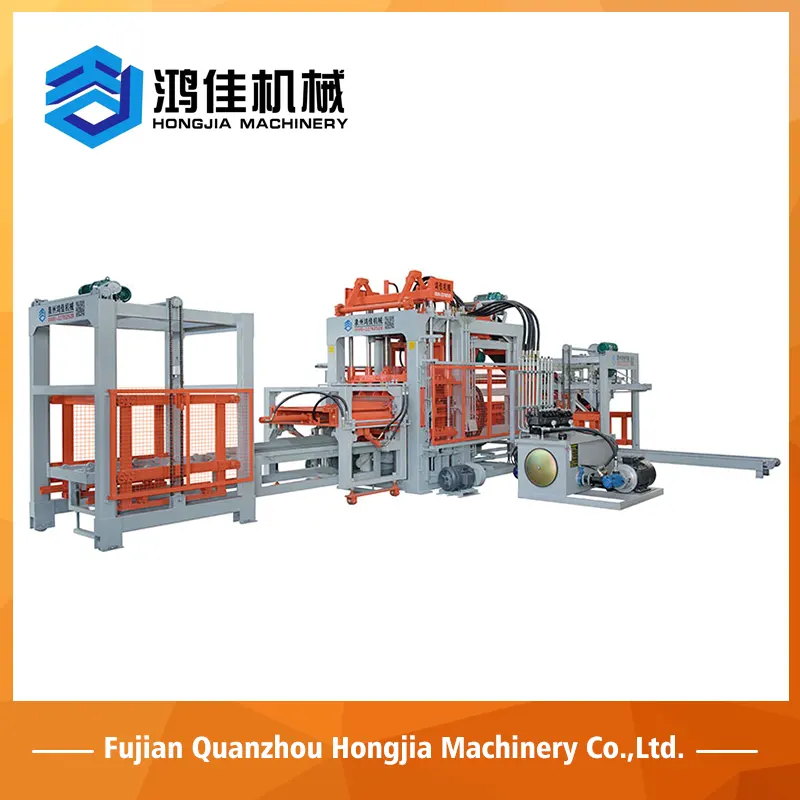

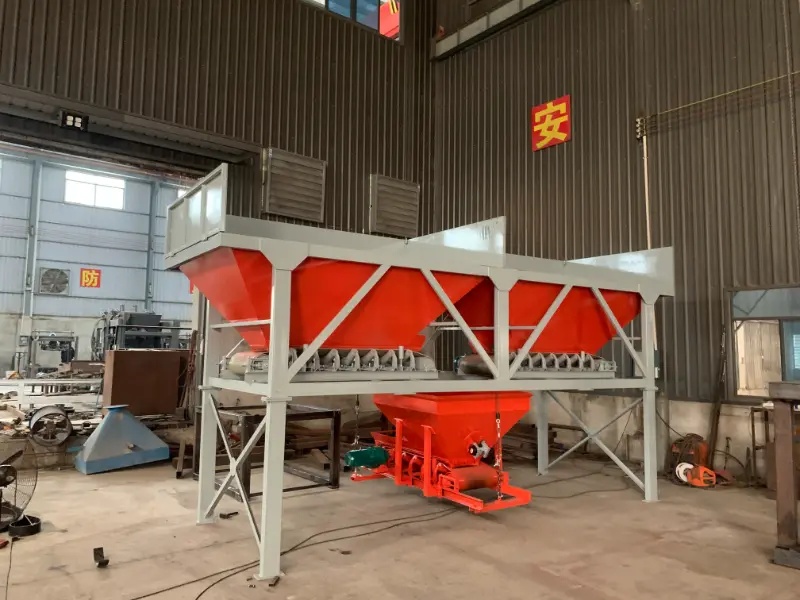
Concrete Batching Machine for Brick Making Machinery
During the production of non-fired bricks, permeable bricks and hollow blocks, the uniformity of material mixing directly determines the compressive strength and yield rate of the finished products. HONGJIA MACHINERY offers Concrete Batching Machine for Brick Making Machinery in stock, which are tailor-made for brick production lines, enhancing the production efficiency and quality of the brick-making machines from the very beginning.
Model:PL-1200
Send Inquiry
Product Description
HONGJIA MACHINERY is one of the leading manufacturers and suppliers of Concrete Batching Machine for Brick Making Machinery in China. You are welcome to purchase from our factory. It adopts advanced forced double horizontal shaft/vertical shaft mixing technology, which can quickly blend raw materials such as cement, sand, gravel, and fly ash into a uniform mixture, ensuring that each batch of slurry reaches the optimal consistency. If you have specific requirements for the brick machine model or production capacity, please provide the data. I recommend a more precise combination for you.
Technical Specifications
|
Model |
PL800 |
PL1200 |
|
Cubage of weighting hopper |
0.8m³ |
1.2m³ |
|
Cubage of reserve hopper |
2*4m³ |
3*4m³ |
|
Productivity |
48m³/h |
72m³/h |
|
Batching precision |
±2% |
±2% |
|
Max. Metage |
1500kg |
2000kg |
|
Batching category |
2 |
3 |
|
Loading height |
2300mm |
2500mm |
|
Measurement |
Electronic Weigher |
Electronic Weigher |
|
Power |
8.1KW |
8.6KW |
|
Weight |
2300kg |
4000kg |
|
Dimension (L x W x H ) |
5470 x 1820 x 2810mm |
8650 x 2000 x 2900mm |
Advantages and Features
Forced stirring, with extremely high uniformity
Our Concrete Batching Machine for Brick Making Machinery adopts dual horizontal shafts or planetary forced stirring. The blades force the materials to generate complex cross-flow in axial, radial and circumferential directions.
Ultra-long wear-resistant lifespan
Designed as adjustable, the stirring blades and liners are made of high-chromium alloy, which has 5-10 times the wear resistance of ordinary carbon steel.
Excellent shaft-end sealing
It uses multiple floating seals + electric automatic oil injection system to form a high-pressure oil curtain, blocking the intrusion of slurry.
High-precision micro-water addition system
It is equipped with high-precision weighing sensors and butterfly valves/mist spray water systems to ensure the moisture content of each batch of materials, controlling the error within ±1%.
Quick discharging and tight sealing
It is equipped with large-diameter pneumatic/hydraulic discharge doors, which can empty the materials within seconds. The discharge doors adopt arc-shaped fitting and special sealing strips to ensure no slurry leaks during the stirring process.
Strong environmental adaptability
It can not only mix conventional sand and gravel, but also mix construction waste crushed materials, fly ash, slag, tailings and other industrial solid wastes, with extremely strong adaptability.
Performance
In terms of mechanical and measurement performance, the Concrete Batching Machine for Brick Making Machinery possesses shock resistance and overload capacity, as well as dynamic measurement stability. The weighing sensor has a high level of protection performance and anti-offset load capacity. Forklifts concentrate within the silo and generate significant instantaneous impacts. The elastic body structure inside the sensor effectively absorbs lateral forces, protecting the measurement circuit from damage. The built-in dynamic drop compensation in the control instrument automatically corrects the predicted volume of the material based on its current flow characteristics, controlling it within a very small percentage range. The pneumatic gate has undergone strict testing and is suitable for continuous operation in all weather conditions.
FAQ
Which raw materials for brick production can be mixed?
Yes, high viscosity fly ash, construction waste, tailings, sand and gravel, cement, and dry-hard concrete can be easily mixed.
How can I match the mixer model based on the output of my existing brick-making machine?
It depends on the single molding cycle and output of the Concrete Batching Machine for Brick Making Machinery. We have in stock small and medium-sized brick machines (such as QT4-15), and we recommend equipping with JS500 or JS750 mixers. For large brick machines (such as QT10-15), JS1000 or higher specification mixers need to be equipped. You can contact us and we can assist in adjusting together.
Is it convenient to replace the after-sales accessories?
The blades and liners can be directly disassembled and replaced by bolts, without complex welding. The maintenance time is shortened to one-third of the traditional method. We offer a one-year warranty and supply various spare parts and molds on a long-term basis.
Are the mixers used for making permeable bricks the same as those for making ordinary cement bricks?
The models can be the same. Permeable bricks have higher permeability and strength. Permeable bricks have extremely high requirements for porosity and extremely low water-cement ratio. Double-rotor mixers are prone to having mixing dead zones, which can lead to excessive slurry blocking the pores. While planetary mixers have no dead zones and the slurry is more evenly wrapped.
Hot Tags: Concrete Batching Machine, China, Manufacturer, Supplier, Factory, Wholesale, Price, Customized, In Stock, Cheap, Latest Selling
Product Tag
Send Inquiry
Please feel free to fill your inquiry in the form below. We will reply you in 24 hours.







X
We use cookies to offer you a better browsing experience, analyze site traffic and personalize content. By using this site, you agree to our use of cookies.
Privacy Policy